Cover simulation A 3D model of the coupling stage in Desk's piece: a 20 × 20 microLED array handing its light through a lens array to an imaging fiber. Change the array size and the per-channel rate and the bandwidth each device needs move together.
This issue's lead
MicroLED Leaves the Screen for the Space Between Chips
As the bottleneck in AI data centers moved from compute to wiring, microLEDs built for displays were called in as light sources linking chip to chip. Microsoft's MOSAIC lays 400 of them across 1 mm² to carry 800 Gbps. Then on 1 October, ₩13.6 billion of Korean capital entered that ecosystem.
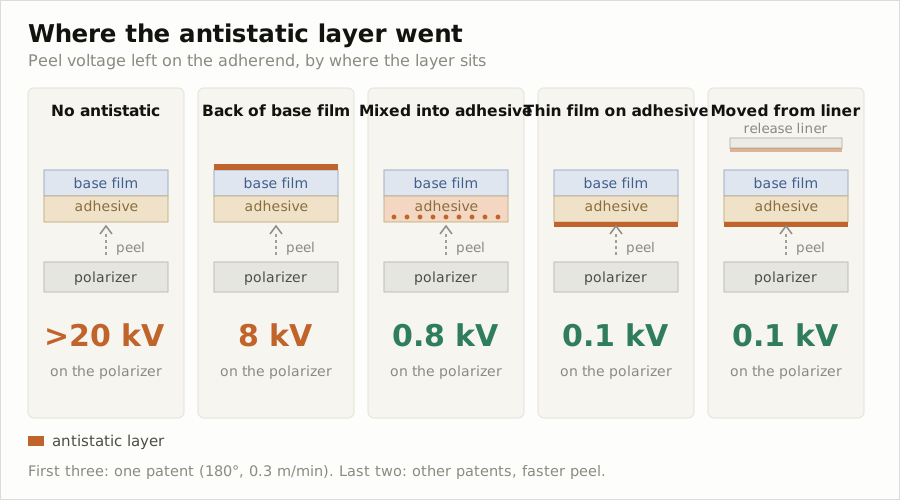
Today the anti-static layer sits not on the screen but on the protective film that gets peeled off and thrown away. Static is generated at the very surface that separates, so the anti-static layer moved from the base film to the adhesive face, and every reduction in static brought contamination and corrosion with it. The mainstream PEDOT:PSS is expensive but survived because it is used as thin as 0.03 micrometers, while CNT, which meets the same condition, still has to clear the wall of dispersion.
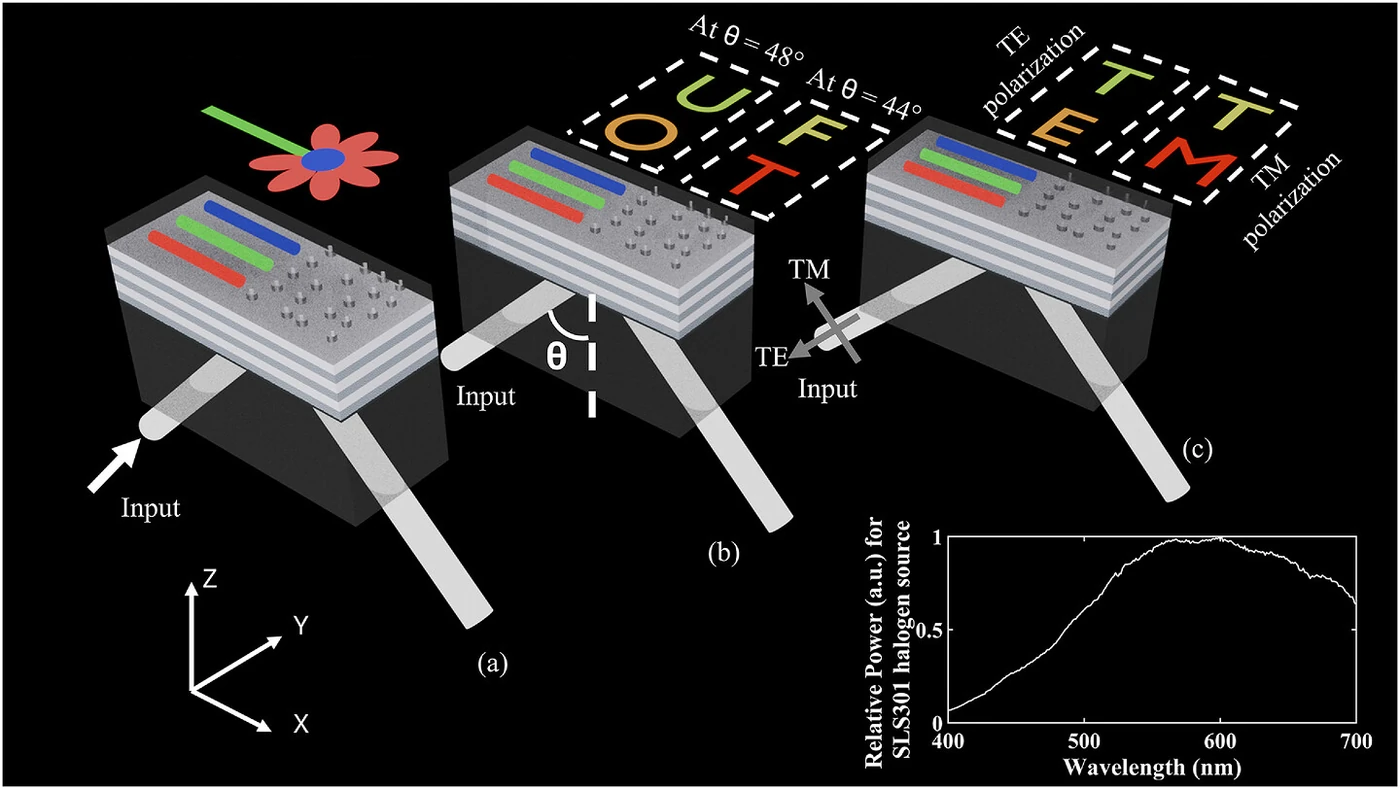
Until now, metasurface holograms needed a laser. Researchers at the University of Toronto produced them with a halogen lamp. A Q-200 resonance compresses a 300-nanometer band to under 4 nanometers, so the device generates coherence itself. That flips the strengths and weaknesses of laser holograms: speckle averages itself out and shrinks, while thin strokes blur.
From September 27 to October 4, 28 major journals were checked in full and narrowed to 128 papers with a display connection, of which 15 are introduced here. Two in-depth articles are covered separately. This window brought together work on bringing the screen close to the eye and on the lifetime and efficiency of blue OLEDs.
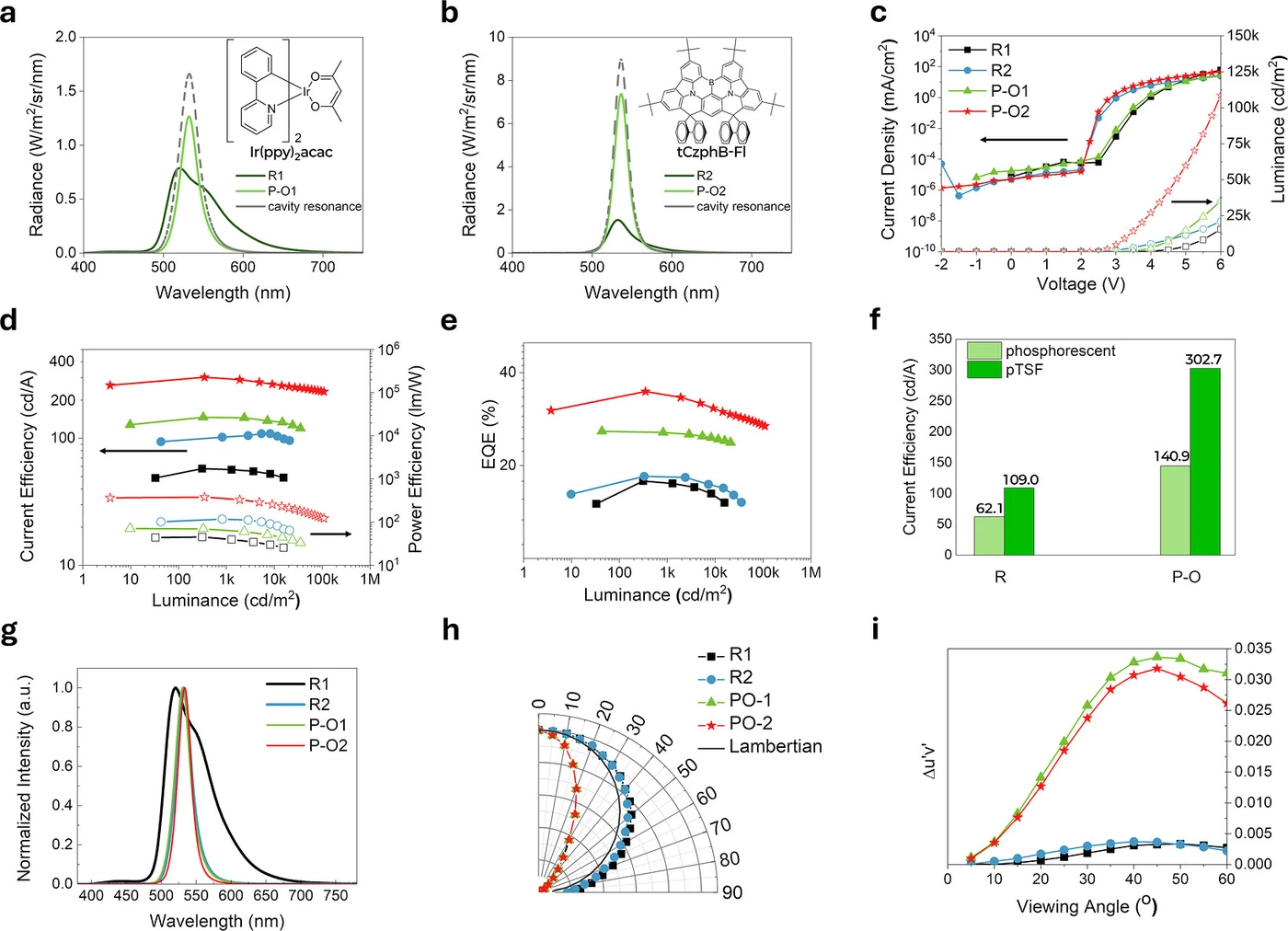
Researchers at Kyung Hee University made the internal light-extraction structure of a top-emitting microcavity OLED gentler. A more deeply etched microlens array sent only 43.5% of the light forward; a gentle corrugation sent 77.3%. Even with low roughness, a steep local slope unsettled the cavity. The result says that disturbing the cavity less comes before scattering harder.
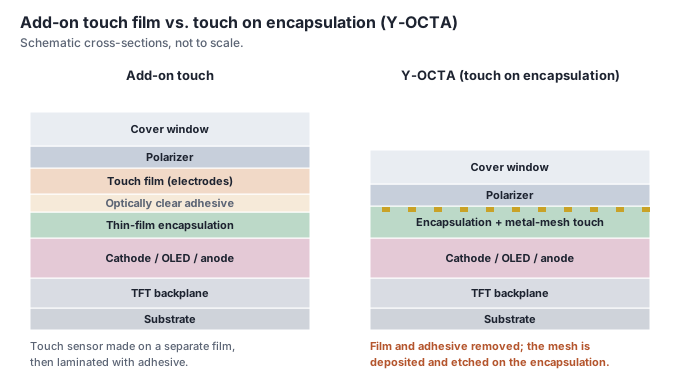
Of the 7 patents LG Display asserted against Tianma, the only one Tianma tried to invalidate at the US Patent Office was a Y-OCTA structure patent. That patent was granted on the two lines left after Samsung prior art stripped away the rest, and when Tianma came back armed with Samsung documents again, its petition never reached a technical hearing. What shut the door was an ownership structure that brought AVIC in back in 2011.