
This issue's lead
iPhone Duo keeps its pen despite a titanium plate
Apple has launched its first foldable, the iPhone Duo. Samsung dropped the pen from its foldables because of titanium; Apple kept it with titanium inside. What separated the two was not the metal but how the pen is read. An EMR pen's magnetic field drives eddy currents in the plate that push back, while a capacitive pen's electric field ends at the OLED cathode before it reaches the plate.
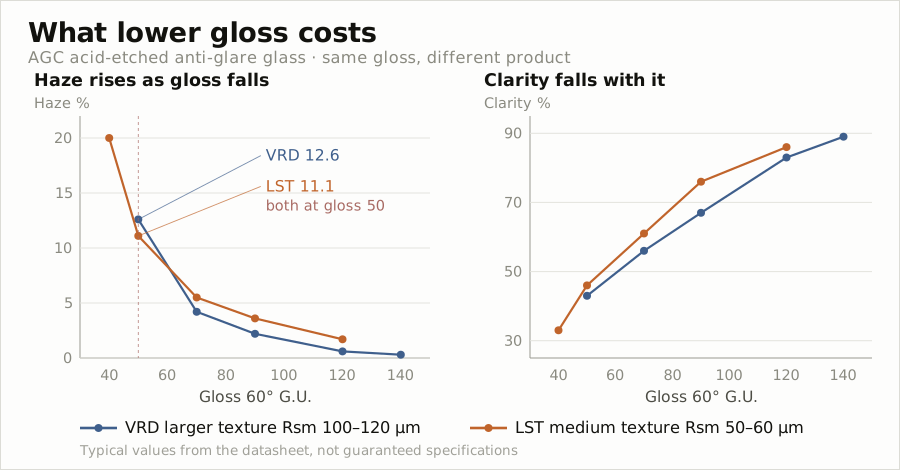
AG does not reduce reflection; it scatters it. The front of the glass still returns a little over 4 percent of the light with AG applied, and the price of scattering it is haze. Etched glass makes all of that haze at the surface, while a film splits it between the surface and the inside of the layer. When external haze divided by internal haze falls below 0.5, interference fringes appear; above 2, sparkle does. The narrow band in between is the design.
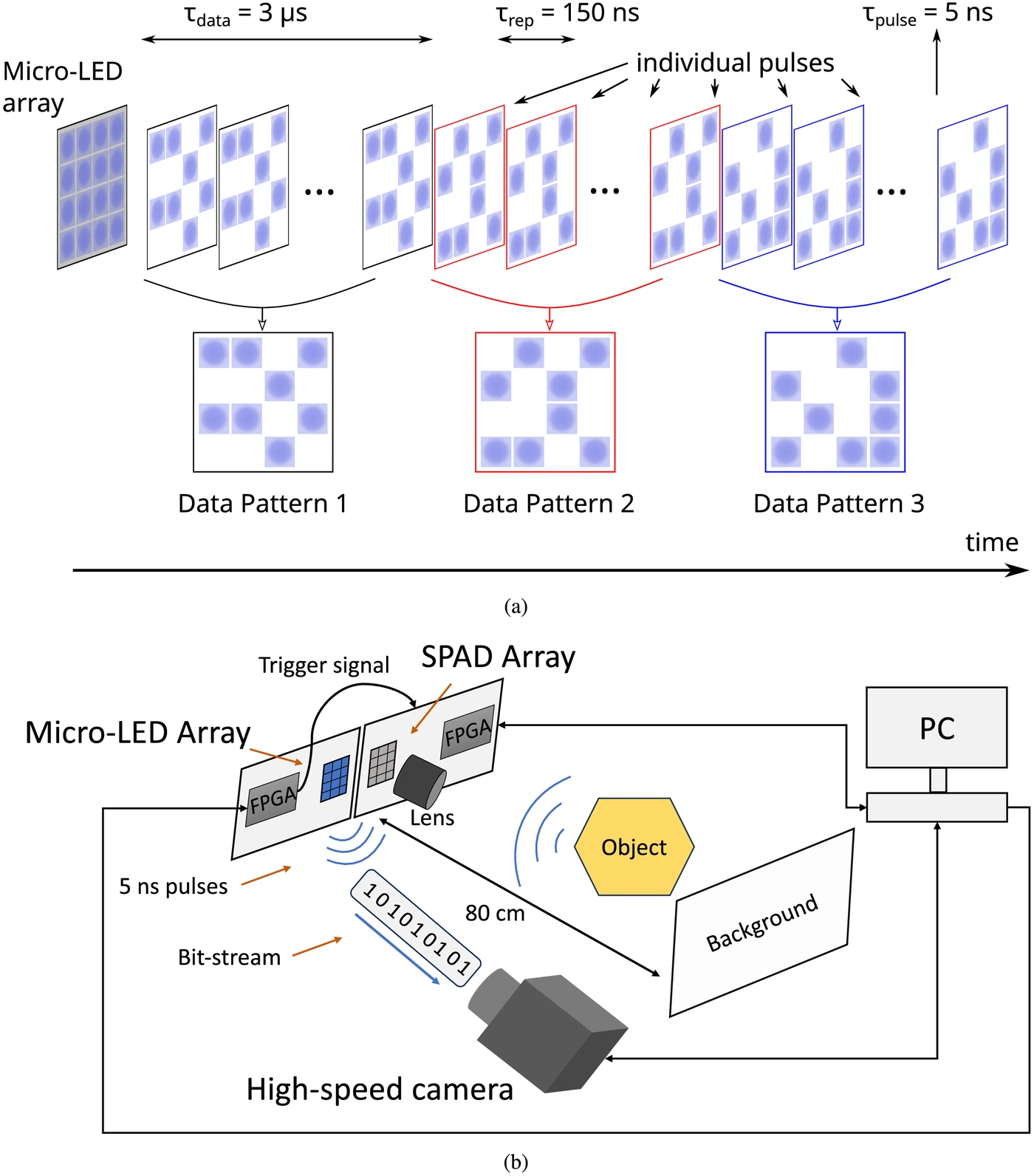
Micro-LEDs can be switched on and off on a nanosecond scale, so a screen is thought able to double as a communication link and range sensor. Researchers at the University of Strathclyde and the University of Edinburgh tried it with a 128×128 display. With the same pixel light they sent 0.68 Gbps while measuring distance to an object 80 cm away with a 4 cm error, and the two functions barely eroded each other. What set the ceiling was not optics but driver chip wiring.
Twelve display-related papers, briefly introduced, picked out of 1,337 published in 28 major journals from 7 to 13 September and narrowed to 98. Green stood out this week: three different materials, an organic emitter, an inorganic phosphor and cadmium-free quantum dots, appeared side by side, all aimed at the same narrower, purer green.
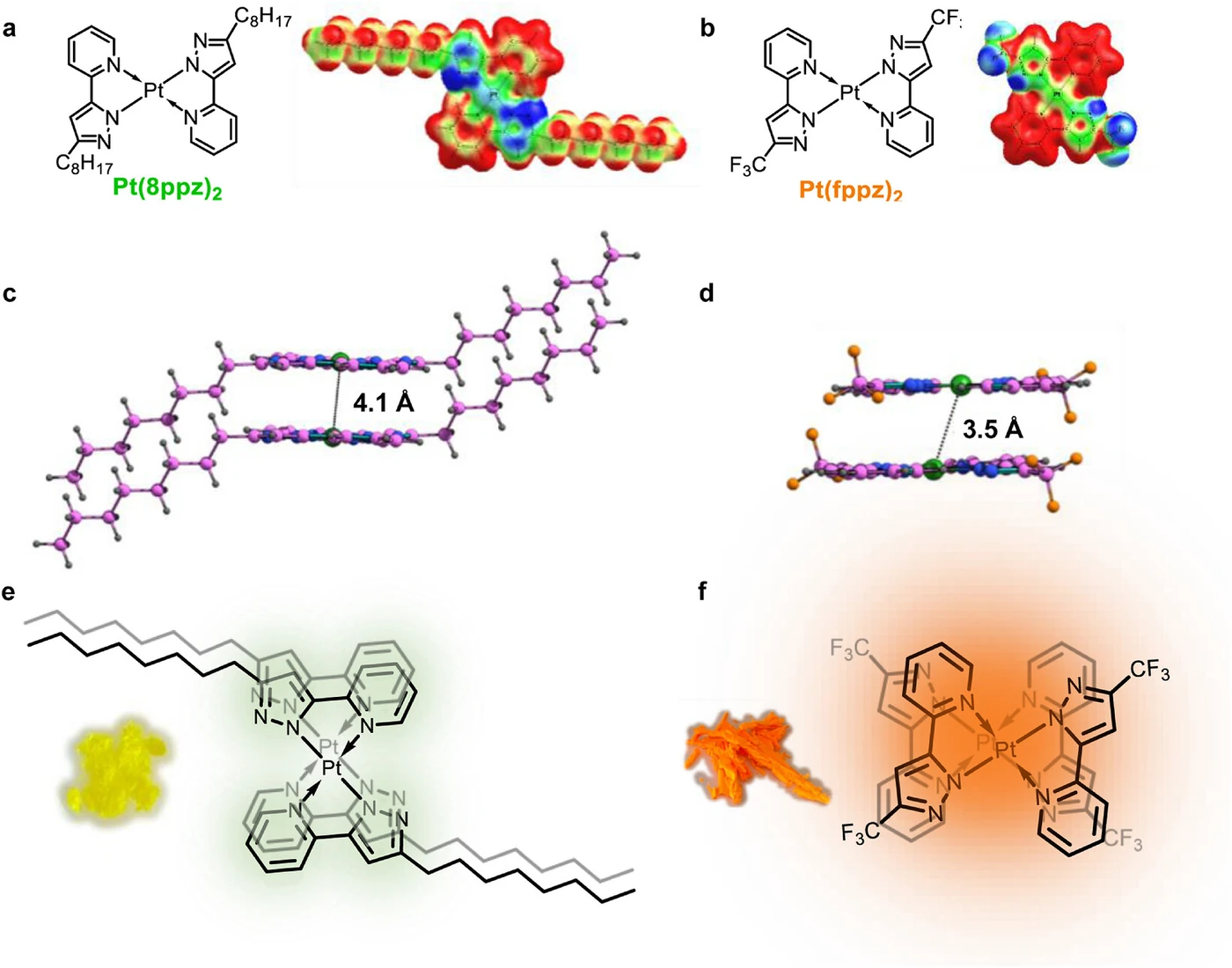
Phosphorescent OLEDs lose efficiency as they get brighter. Researchers at the University of Queensland and Kyushu University narrowed down the cause with two platinum complexes built on the same core. The one whose Pt atoms sit just over 3 Å apart kept about 65% of its peak efficiency even at 10,000 cd/m², while the one with Pt atoms more than 5 Å apart fell to a tenth at 1,000 cd/m². But the very structure that tamed roll-off pulled the emission colour down to red.
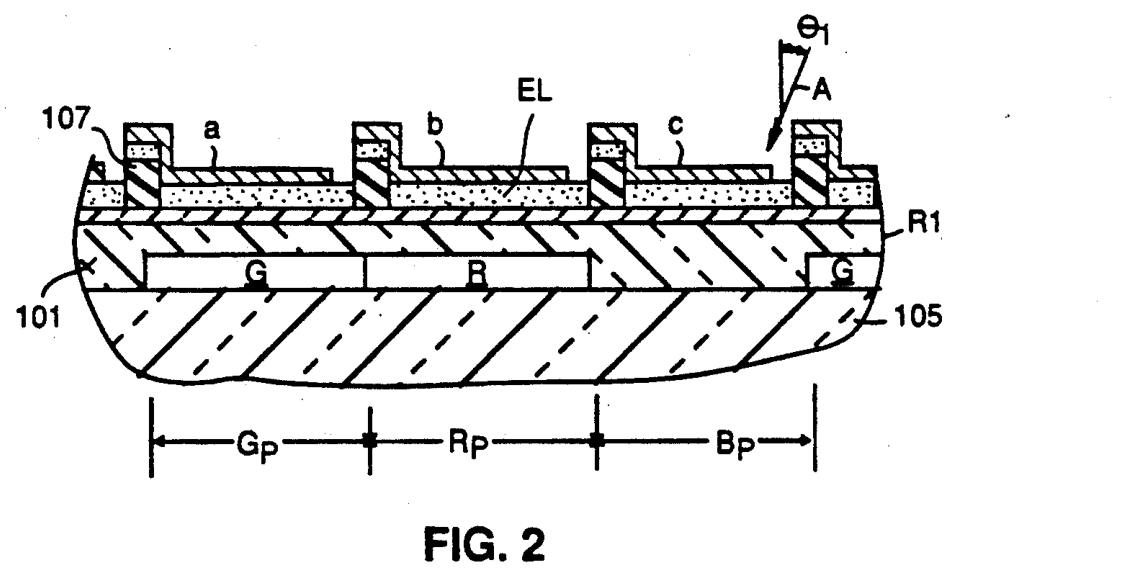
A quantum dot top plate over a blue OLED is a bundle of techniques for stopping light that leaks in three directions. Yet of the 13 top-plate patents Samsung Display filed with priority dates up to 2016, 10 were written against an LCD background, and none of their independent claims mentions liquid crystal. Even now, only 6 of its 188 structure and process patents narrow the light source to organic emission. The part was designed to be indifferent to its light source.