 DISPLAY NOW 15
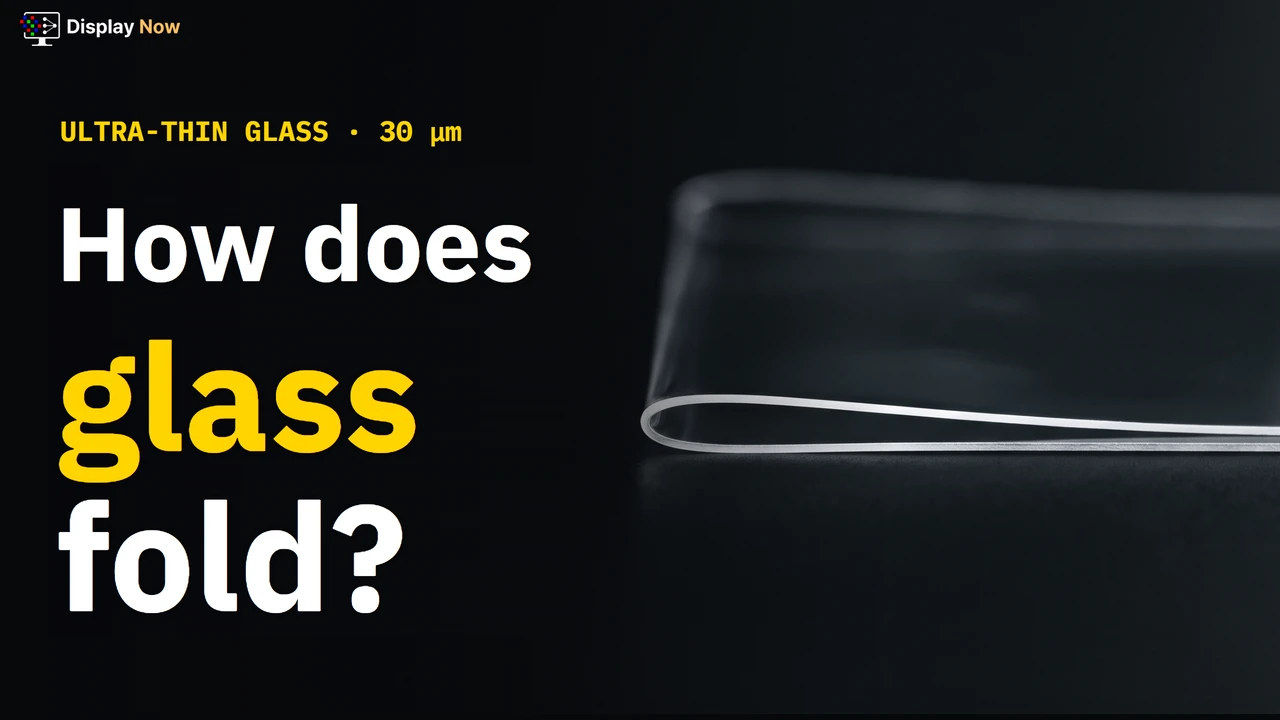
Cover simulation From our DISPLAY NOW video on how ultra-thin glass (UTG) folds and when it breaks (8:47, Teker's piece; Korean narration with English subtitles). The article adds a simulator you can fold yourself.
This issue's lead
How Does Glass Fold?
How tightly ultra-thin glass (UTG) can fold is set less by its thickness than by the strain on its outer surface. The limiting radius for 200,000 folds grows in proportion to thickness, and chemical strengthening goes in shallow, the opposite of thick glass. We followed the numbers in patent examples from sheet forming to pen drop.
Article title Ultra-Thin Glass Cover Windows
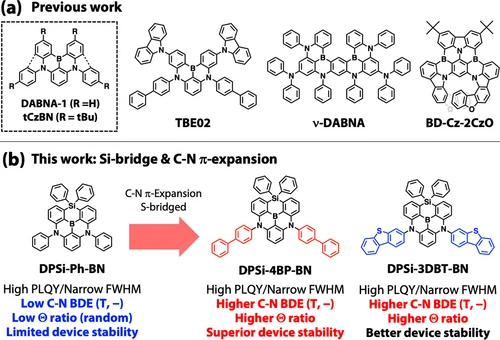
Multi-resonance emitters have raised color purity and efficiency, but lifetime lagged. Pinpointing degradation at the C-N bond of the electron-accepting state and stiffening it stretched LT80 from 52 hours in the reference device to 213 hours.
From November 16 to 22, 29 major journals were screened in full, narrowing to 100 display-related papers, with 17 introduced here. Two in-depth articles run separately. Seven holography and light field papers arrived at once, and a flexible quantum dot LED reported 25,400 ppi together with 23.4% external quantum efficiency.
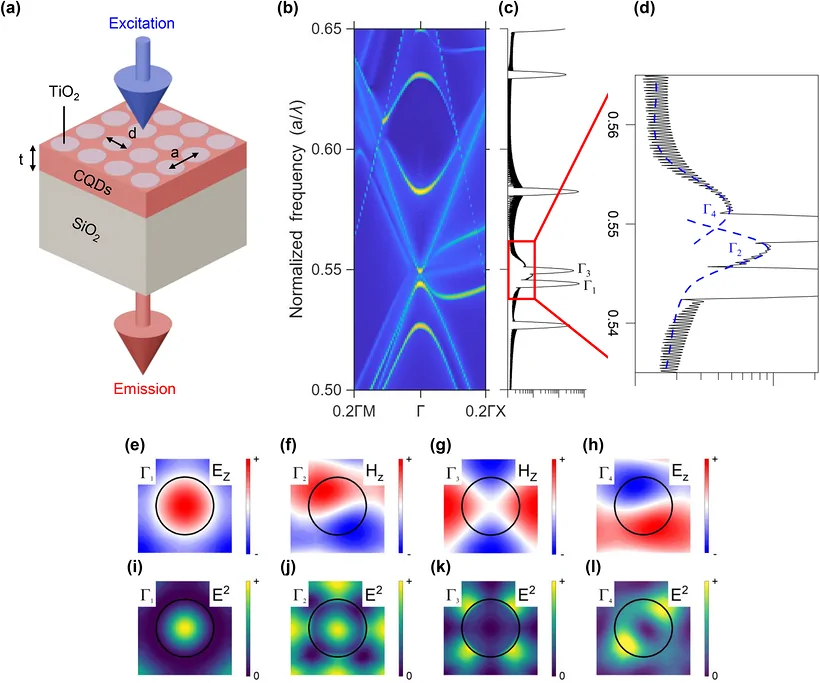
In a color conversion phosphor, blue light that passes through unabsorbed is lost. A Seoul National University team inverted a photonic crystal's air holes into TiO2 pillars and overlapped TE and TM resonances at the blue excitation wavelength, lifting absolute absorptance to 0.8 by changing structure, not material.
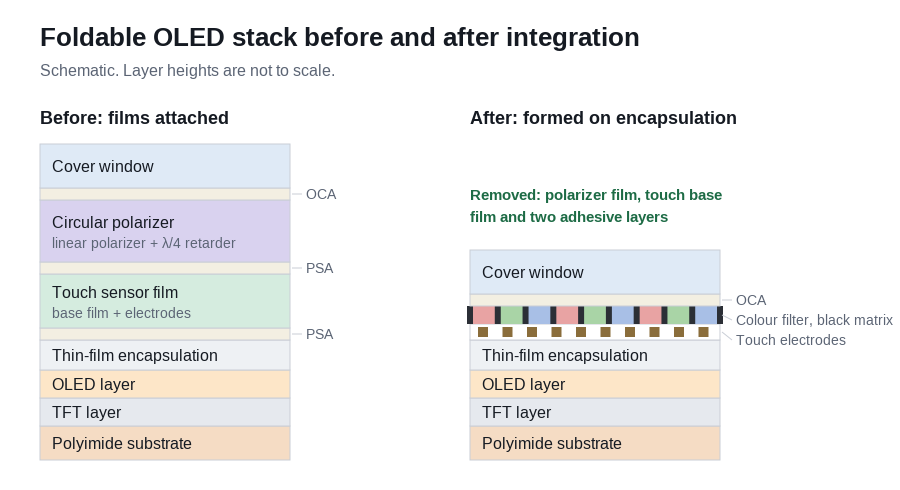
A foldable must be thin to fold. Patents replaced a roughly 150 µm circular polarizer and a film touch sensor (33 µm film plus 25 µm adhesive) with color filters and touch electrodes on the encapsulation. The next claims address what remained: touch noise, broken folding-area wiring and color filter peeling.
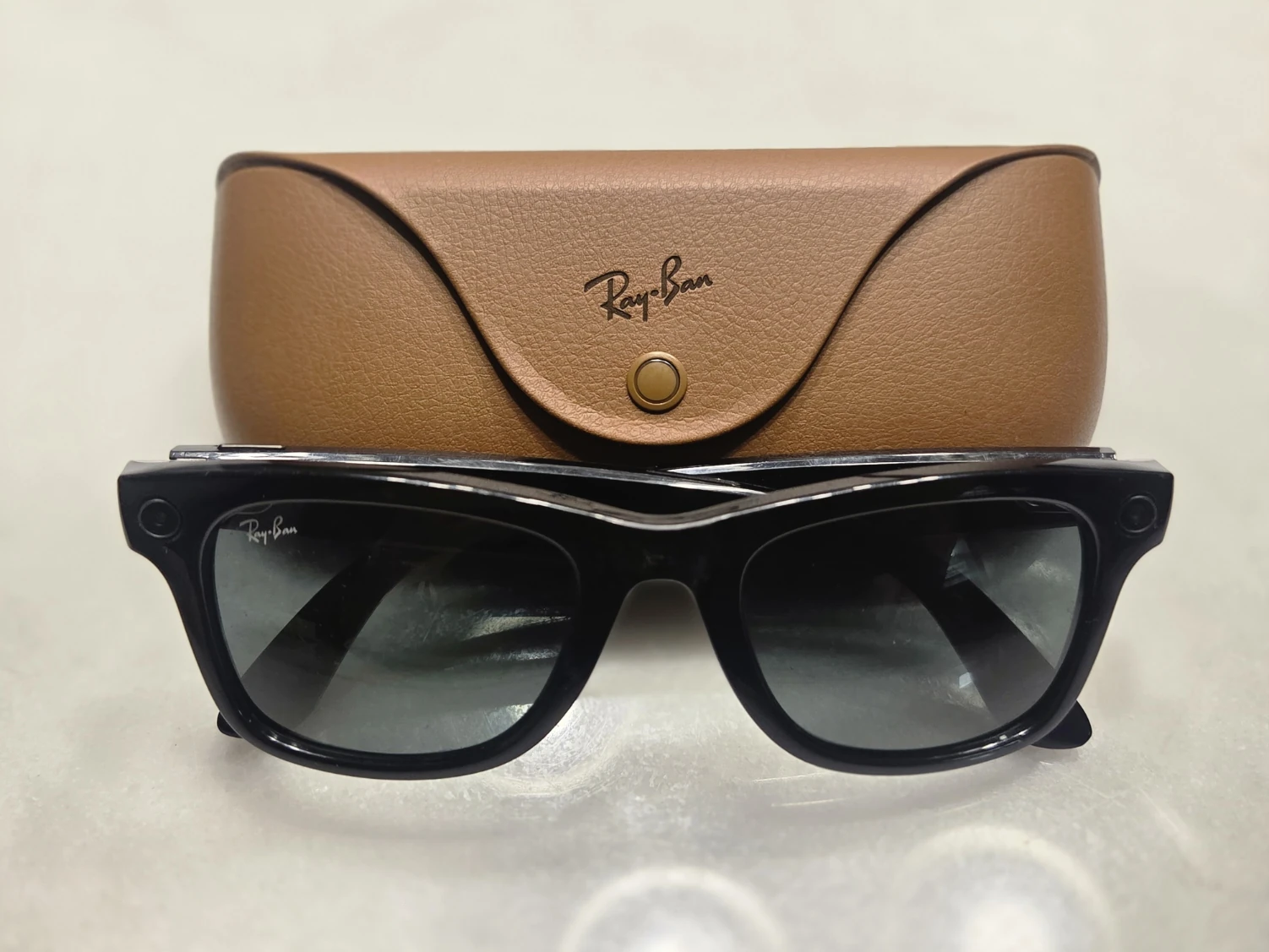
Ahead of Korea's College Scholastic Ability Test (CSAT), debate grew over whether AI glasses could serve as cheating tools. Using public sources, we explain how a waveguide display floats text on a lens and compare the approaches of Meta, Rokid, Samsung and others.