 DISPLAY NOW 13
Cover simulation A 3D model folding the same three plates with a stiff and a soft adhesive to compare neutral planes and strain (Claim's piece). Layer thickness and end slip are enlarged for visibility.
This issue's lead
Adhesives for Foldable Displays
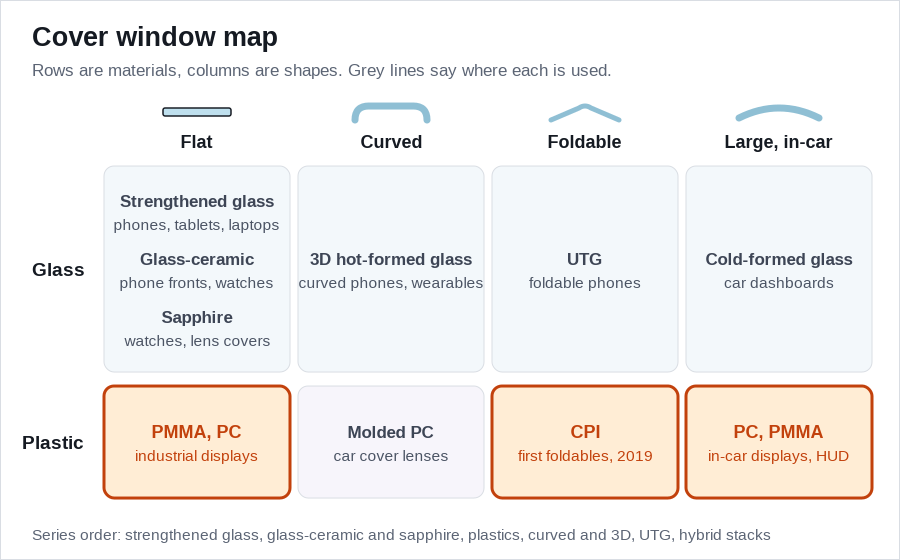
PC plates take about 30 times PMMA's notched impact but need an acrylic skin for hardness. Folded CPI film runs at 2 to 6 times its crease-free strain limit, and the crease comes from time held shut, not fold count.
From November 2 to 8, 29 major journals were screened in full, narrowing to 104 display-related papers, with 16 introduced here. Two in-depth articles run separately. Quantum dot and perovskite emission dominated.
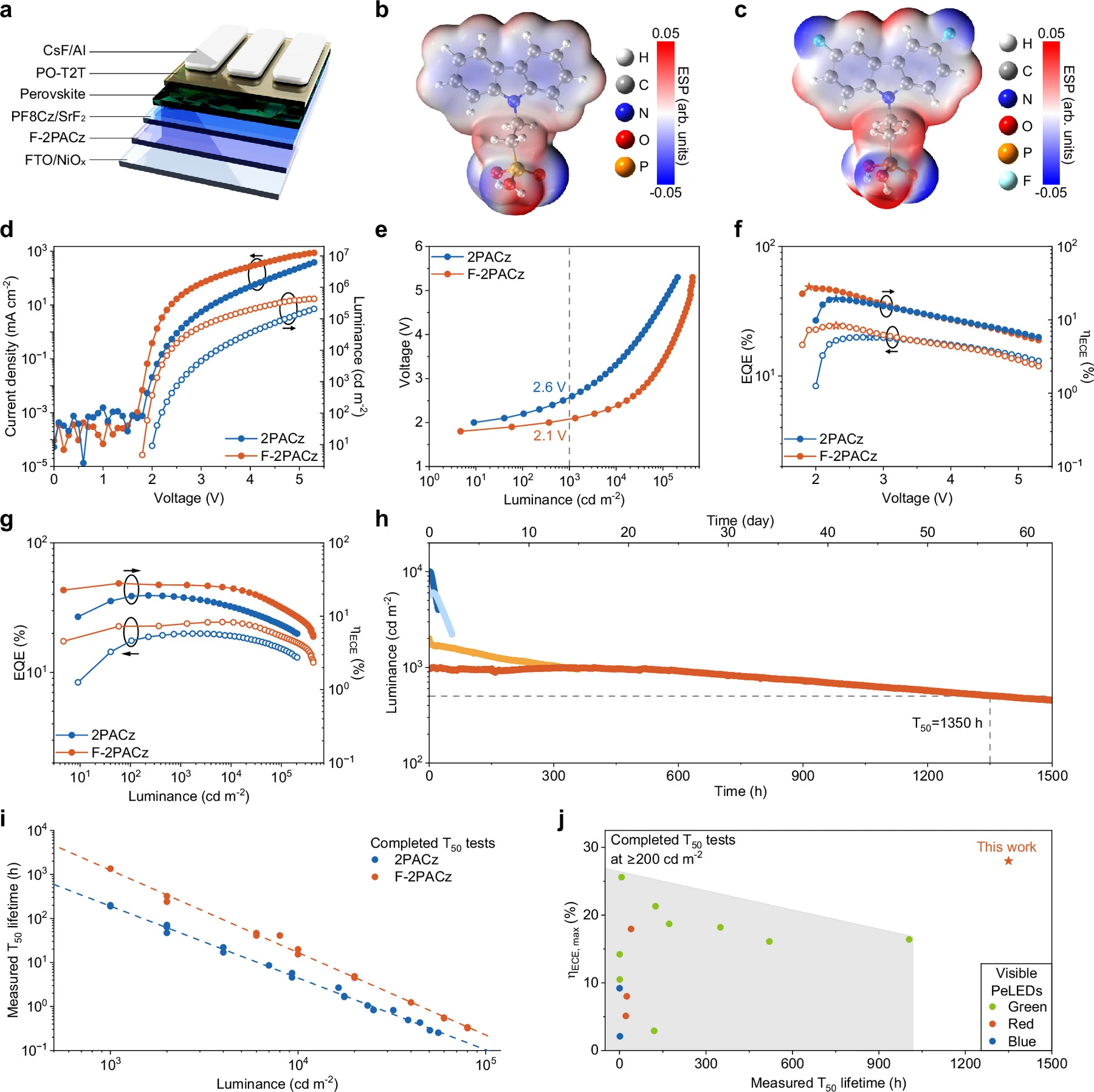
Measured without extrapolation, this green perovskite LED ran 1,350 hours at 1,000 nits. A fluorinated monolayer under the hole transport layer cut driving voltage to a sub-bandgap 2.1 volts, where ion migration stalls.
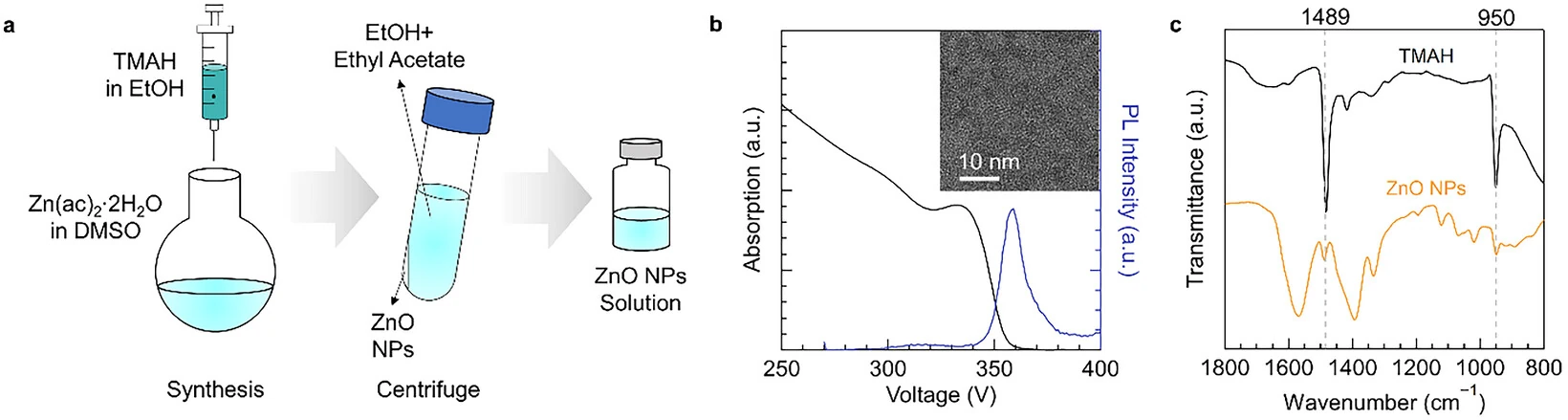
Raising the anneal temperature improved electron transport yet cut QLED luminance and efficiency. Residual TMAH from ZnO nanoparticle synthesis survives purification and diffuses into the quantum dots, quenching excitons.
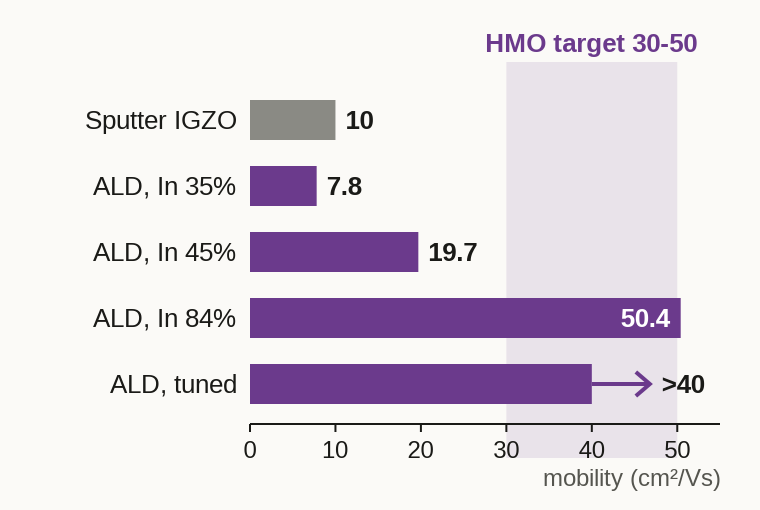
Press reports say Apple is weighing sputtering or ALD for next-generation OLED oxide TFTs (HMO). LG Display's ALD paper tops 40 cm²/Vs but omits yield and cost, so we see first mass production as likely sputtering-based.